
Garage floor concrete in Bend OR - a floor built for wet tires, salt and winter
Cracked, flaking or sinking garage floor? We pour a new slab with joints planned ahead and a base packed solid underneath.
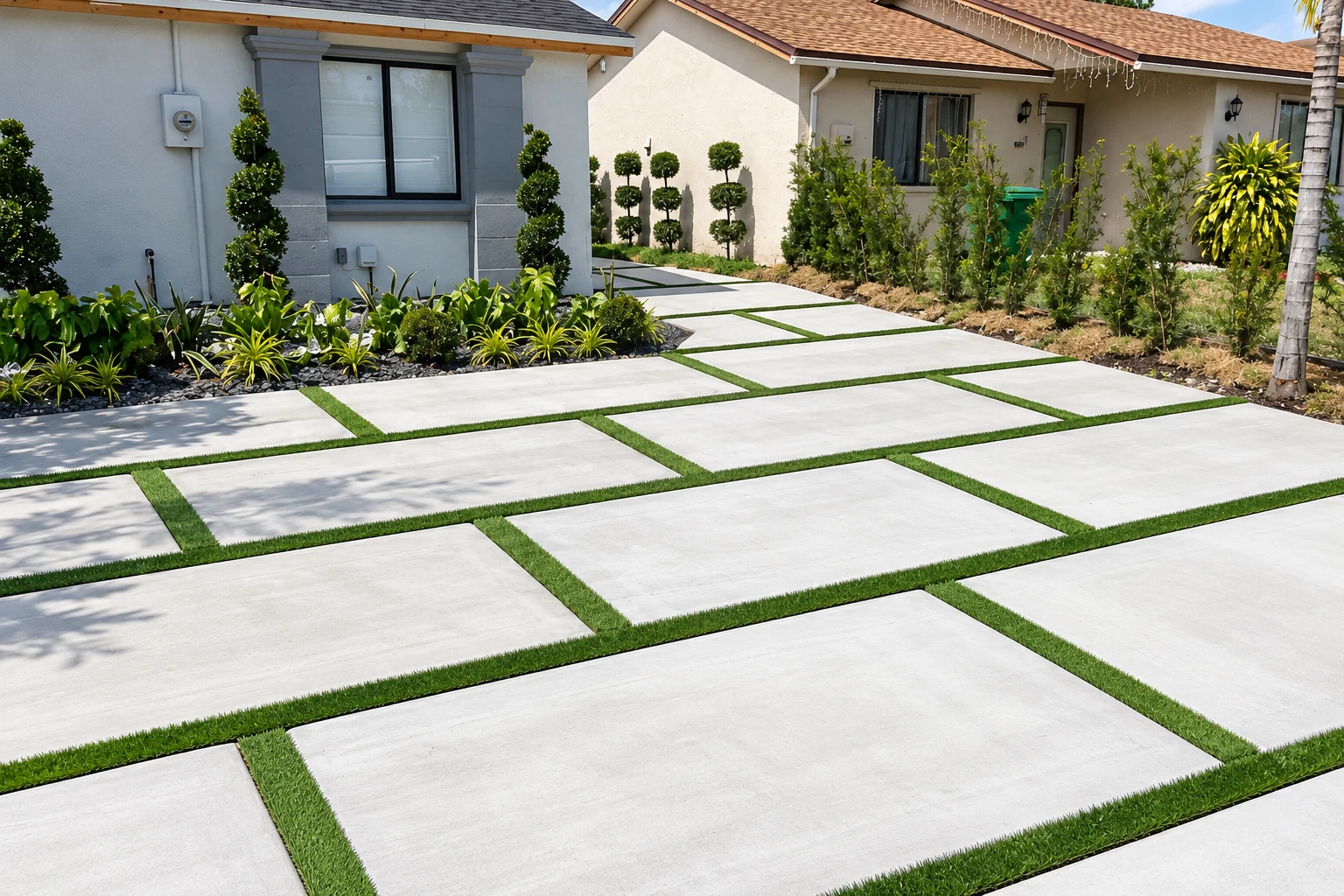
What goes into a new garage floor in Bend?
Garage floor concrete in Bend means a new slab poured over a dug-out, packed base, with joints planned ahead and a mix picked to take wet, salty tires and freezing winters. Once it's down, you keep the car off until it has cured, the wait that lets concrete gain its strength before it carries weight.
Most calls start with an old floor that's cracked, sunk at one end or flaking where the car sits, and the real question is whether it can be patched or has to come out. Price moves with how much old concrete gets broken out and hauled, the size of the slab, how much base work the ground needs and whether the apron at the door is part of the job, while the schedule turns on the permit check, the forecast and the cure. My written estimate spells out what's in it and what isn't, so you can hold it up against other bids. Oregon law generally requires anyone paid for concrete work to be licensed by the state's Construction Contractors Board, and we're fully licensed and insured. If your garage is cut into a slope, the job can also call for concrete retaining walls to hold the ground back beside the driveway.
How do you know your garage floor needs replacing?
Garage floors wear out from the top and from underneath. These are the things people usually describe when they call, and what each one tends to mean once I'm standing on the slab.
Cracks that keep widening or spreading usually mean the base underneath has shifted, not just the surface.
One end of the slab sitting lower than the rest often points to a base that settled with the dirt.
Water pooling in the middle or running toward the house means the floor slopes the wrong way.
A flaking, peeling top where the car parks is called scaling, and salt plus freezing often causes it.
A dusty, powdery surface that never stays swept usually means the top was weak from the day it was poured.
A lip where the garage floor meets the driveway usually means one slab moved and dragged the other.
If a crack is growing or water is heading toward the house, call before another winter, because water that freezes in an open crack only makes it worse.
What happens when you call about a garage floor in Bend?
Here's how a garage floor job runs with us, from the first call to the day you park on it. I write the estimate myself and I'm on site while our crew does the work.
Call or send a request
Call (458) 256-4015 or send a request through the form and tell us what's going on with the floor. We set up a time for me to come see it.
I look and write it up
I walk the garage, check where the water runs and ask what you need the floor to do, whether that's parking, a workshop or both. You get a written estimate that says what's included and what isn't, and I tell you at that visit whether the job needs a permit.
We sort permits and pick a date
Once you say go, we either pull the permit ourselves or tell you plainly who has to, before anything goes on the calendar. Then we set a pour date with the forecast in mind.
Our crew pours and cleans up
Our crew breaks out the old floor, digs out and packs the base, pours, finishes and cuts the joints while I run the job on site. We clean up before we call it done, and the car stays out until the slab has cured.
Get a written estimate for your garage floor
We reply within one business day to set a time, then I come out, look at the garage and write up a free estimate on site. There's no obligation to go ahead.
- Call
- (458) 256-4015
- Hours
- Mon–Sun: 6 AM–11 PM
Site, base and joints on a Bend garage slab
A garage slab here gets planned around the site it sits on. The state keeps a design criteria map that shows, for a given address, the frost line depth, weathering potential and air freezing index a house is designed for, and Deschutes County lists a few more design values, such as soil bearing capacity. That's the kind of information that tells you what a slab is up against before anyone picks a mix.
The base is the part I won't cut corners on, even though nobody sees it once the concrete is down. We dig out to the subgrade, the ground the slab rests on, then bring in base and pack it, because a base that's only raked level settles with the dirt and takes your floor with it. If a budget has to come down, I'd rather trim the finish than the base.
We keep the garage slab separate from the driveway, the walls and the footings with isolation joints, a soft strip between them, so each piece can move on its own without cracking the next. For the top, one sealer maker says its penetrating sealers soak in, cut how much water and salt the concrete absorbs, keep a natural look and grip, and typically last 5 to 10 years when applied properly. If you'd like color or pattern instead of plain gray, look at our decorative concrete work.
Garage floor questions we hear in Bend
How much does it cost to replace a garage floor in Bend?
I don't quote a garage floor over the phone, because the price turns on what I find in and around the old slab. Choices on your side move it too, like adding the apron, a sealer or a decorative finish, and full base work is the one place I'd tell you not to save. Call (458) 256-4015 and I'll come out and price it.
What kind of concrete holds up to freezing and thawing?
For concrete that sees hard freezing and thawing, the trade guidance is to order good quality air-entrained concrete, a mix with tiny air bubbles that give freezing water room to expand. Ask any contractor which mix their bid includes, and ours is written into the estimate.
Will my new garage floor crack?
It can, because no one can keep concrete from cracking entirely, but properly designed joints control where cracks happen and keep them small. Control joints are cuts in the slab that give it a planned place to crack, and I lay them out with you before the pour so you know where they'll be.
How do I take care of a new concrete garage floor in its first winter?
Skip deicing chemicals on it for that first winter, and after that use them in moderate amounts. When the weather lets you, hose off the salt your car drags in, since wet, salty tires are what wear a garage floor. If we pour late in the year, plan on getting through that first winter without deicers on the new concrete.
Who do I ask about permits for a garage floor in Bend?
The City of Bend Permit Center helps you figure out which permits a project needs and answers questions by email, by phone or in person. It takes questions Monday to Friday, 9 a.m. to 4 p.m., and walk-ins are welcome. I also check at the estimate whether your job needs one.
What is the best time of year to pour a garage floor in Bend?
Any outdoor concrete in the job, like the apron at the garage door, calls for caution in late fall, winter and early spring if it could freeze soon after the pour while it's still saturated. That's why we watch the forecast so closely when we pick your date.
Other concrete work around your garage
Decorative concrete
If a plain gray garage floor isn't what you want, decorative concrete adds color or pattern to a slab, and it can carry onto the patio or walkway too.
Concrete retaining walls
When a garage sits into a hillside, a concrete retaining wall holds the ground back from the driveway so dirt and runoff stay off the new slab.
Get your garage floor on the calendar
Have your address and a few photos of the current floor ready when you call (458) 256-4015 or fill out the form, so I know what I'm walking into before I get there.
Mon–Sun: 6 AM–11 PM