
Concrete Driveway Building in Bend OR - a slab that stands up to freeze and thaw
Cracked, sinking or puddled driveway? We plan the mix, the pour date and the first days so your new slab holds up to Bend winters.
What goes into building a concrete driveway in Bend?
Concrete driveway building in Bend means replacing a cracked, sinking or gravel driveway with a new concrete slab that's mixed and poured to handle freezing, thawing and deicing salt. Then it's protected through its first days so it can cure, which is the wait while it hardens and gains strength.
Most people call me once the old driveway has cracked, sunk or started holding water, and the first thing they want to know is what it'll cost and how long they'll be parking on the street. The price mostly turns on the size, whether there's an old slab to tear out and haul away, whether the work reaches the approach where your driveway meets the street, and how much finish work you want on the surface. The schedule turns on the weather more than anything, because I set the pour date around the forecast so a freeze doesn't catch the new slab, and it also turns on any permit the job needs. Your own number comes from the estimate. If you've been thinking about a concrete patio too, tell me at the visit and I'll look at both.
How do you know it's time for a new concrete driveway?
Most driveways tell you they're done long before they fall apart. These are the signs I hear about most on calls around Bend, and what each one usually means for your slab.
Cracks that get wider every spring usually mean the slab is moving and patching won't hold.
A sunken section with a lip you trip on usually means the ground under it has settled.
Water that pools on the driveway or runs toward the garage means the slope is working against you.
A top surface that flakes or chips after winter often comes from freezing, thawing and deicing salt.
A gravel or worn asphalt driveway that ruts, puddles and tracks dirt inside is ready for an upgrade.
A broken or crumbling piece where the driveway meets the street usually means the approach needs replacing too.
If water is running toward your house or a sunken edge is tripping people, call before another winter sets in rather than waiting to see if it gets worse.
What happens after you call us about a driveway?
Here's how a driveway job runs with us, from your first call to the walk-through at the end, and who you'll be dealing with at each step.
Call or send a request
Call (458) 256-4015 any day between 6 AM and 11 PM, or send a request through the form. We'll set a time for me to come see the driveway.
I visit and write the estimate
I come out, look at how the driveway sits and where water runs, and ask what you need it to handle. The written estimate says what's in it and what isn't, and it's where we settle the mix and the pour date and plan how we'll protect the slab in its first days.
We set permits and the date
Once you say go, we sort out any permit the job needs and set a pour date with the forecast in mind. Before digging starts, Oregon's utility regulator says to call 811 at least two business days ahead so buried lines get marked.
We pour, protect and clean up
Our crew does the work and I run the job on site, and we clean up before we call it done. Before we leave, I walk you through how to treat the new driveway through its first winter.
Get a free on-site estimate for your new driveway
Send the form and we'll get back to you within one business day to set a time. I'll come out, look at the driveway and write up a free estimate, with no obligation to go ahead.
- Call
- (458) 256-4015
- Hours
- Mon–Sun: 6 AM–11 PM
Mix, finish and sealing choices for a Bend driveway
The biggest choice is one you'll never see. For concrete that freezes and thaws hard, a national concrete trade group recommends ordering good quality air-entrained concrete, which holds millions of tiny air bubbles that give freezing water room to expand so stress doesn't build up in the slab. We settle the mix at the estimate, and it's fair to ask any contractor, us included, whether the concrete they plan to order is air-entrained.
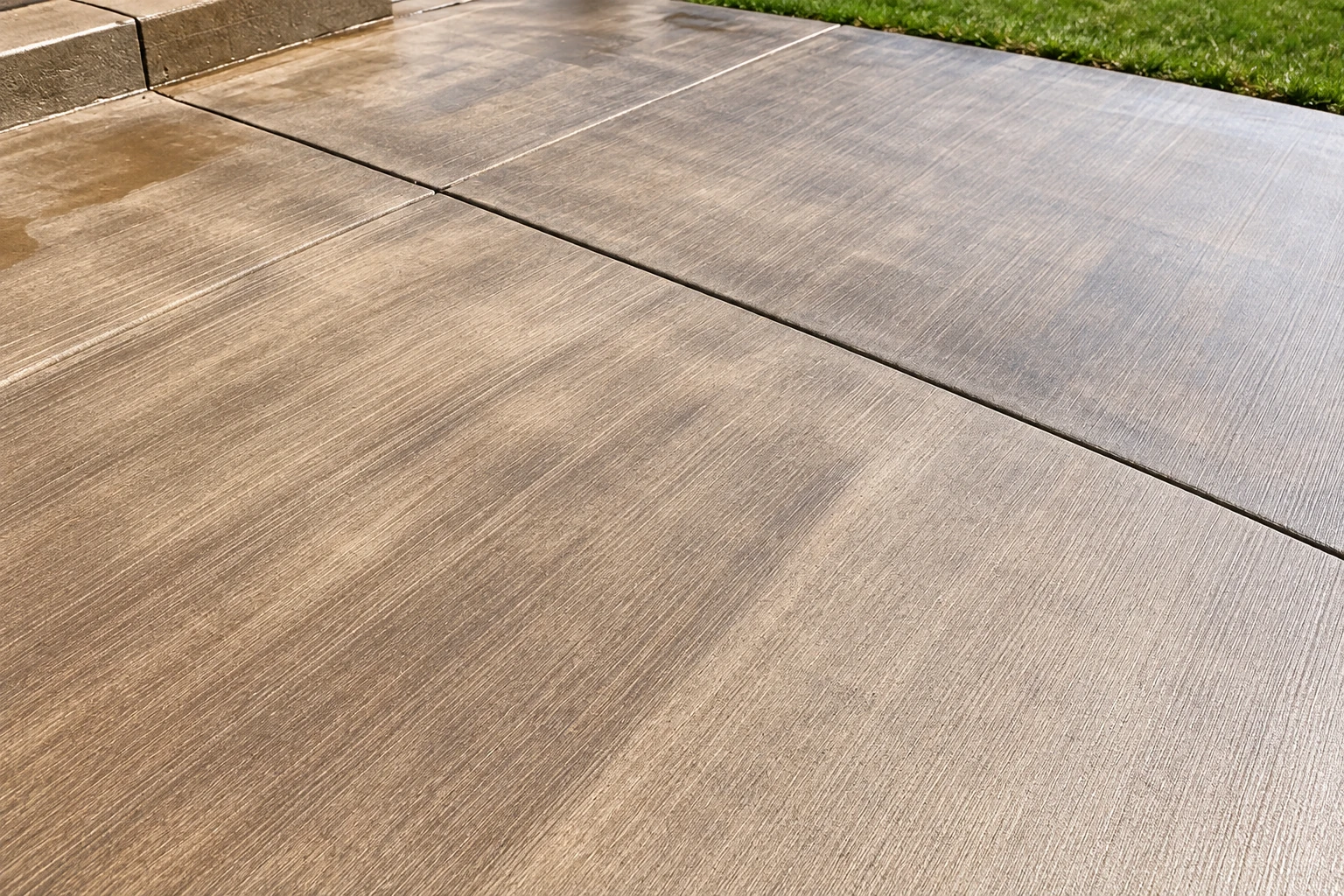
For the surface, a broom finish leaves a light, gritty texture that gives tires and boots some grip, and the same group says it's enough for most outdoor surfaces. Working the top too much knocks out air bubbles near the surface, so a plain finish also helps the slab handle winter. If you want pattern or color, stamped concrete is an option, but on a driveway that sees snow, plows and salt, I lean toward the plain finish and put the money into what makes the slab last.
Down the road, one upkeep step the group suggests is a breathable concrete sealer or water repellent made for slabs, put on once the concrete is reasonably dry. It points to late summer, after a few dry days, as an ideal time to do it, which in Bend usually lines up well with the weather.
Concrete driveway questions we hear in Bend
How much does a concrete driveway cost in Bend?
A concrete driveway in Bend usually costs about $9 to $18 per square foot, and that's the going rate around here for the work, not a quote from us. Where yours lands depends on the things covered above, like size, tearout and the approach, and your own figure comes from the on-site estimate.
Can you pour a concrete driveway in cold weather in Bend?
Yes, but it takes care, because fresh concrete that freezes can lose more than half its potential strength and won't be durable. A national concrete group urges caution about pouring outdoor concrete in late fall, winter or early spring if it could freeze soon after while still saturated, and new concrete needs protection from freezing until about two days after the pour. If you're planning a cooler-season job, ask any crew how they'll protect the slab once the air drops or is expected to drop below 40°F, which is where a concrete standards group says cold weather concreting starts.
Who issues permits for a driveway approach in Bend?
The City of Bend issues right-of-way permits for building or changing a driveway approach, curb or sidewalk in a public right-of-way or on city property. We check at the estimate whether your job needs a permit, and if it does, we either pull it ourselves or tell you plainly who has to before anything goes on the calendar.
Do concrete contractors need a license in Oregon?
Yes, Oregon law generally requires anyone paid for construction that improves real property to be licensed, and the state Construction Contractors Board lists concrete as an example. We've been in business since 2017 and we're fully licensed and insured. Your satisfaction, guaranteed.
How do I take care of a new concrete driveway its first winter?
Skip deicing chemicals on new concrete through its first winter, then use them in moderate amounts after that. Deicers keep the surface wetter and add freeze-and-thaw cycles, which is hard on young concrete, and it's the main thing I go over with you on the walk-through.
What causes a new concrete driveway to crack?
Early cracks usually come from control joints that were cut late or skipped, water draining the wrong way, or a pour done in weather that hurt the top layer. Control joints are grooves cut into the slab to give it a planned line to crack along, so when they're placed and timed right, the cracks that do show up usually stay in them. I'd rather be straight with you that concrete can still crack, so we also check where water will run and plan the pour around the weather, since a hot midday pour can leave a weak, dusty top.
Related concrete work around your driveway
Concrete patio construction
If the backyard needs a spot to sit as much as the front needs a spot to park, we can plan a patio alongside the driveway.
Stamped concrete services
When plain gray isn't the look you want for a walkway or patio, stamped concrete adds pattern and color, and we'll tell you honestly where it fits best.
Get your driveway on the pour calendar
Pour dates turn on the weather, so call (458) 256-4015 or send the form with your driveway's rough size, whether it meets the street and the season you'd like.
Mon–Sun: 6 AM–11 PM