Concrete patio construction in Bend OR - a slab built for freezing winters
Old patio cracked, sunk or chipping, or no patio at all? We pour a new slab on a packed base, timed around cold nights.
What goes into building a concrete patio in Bend?
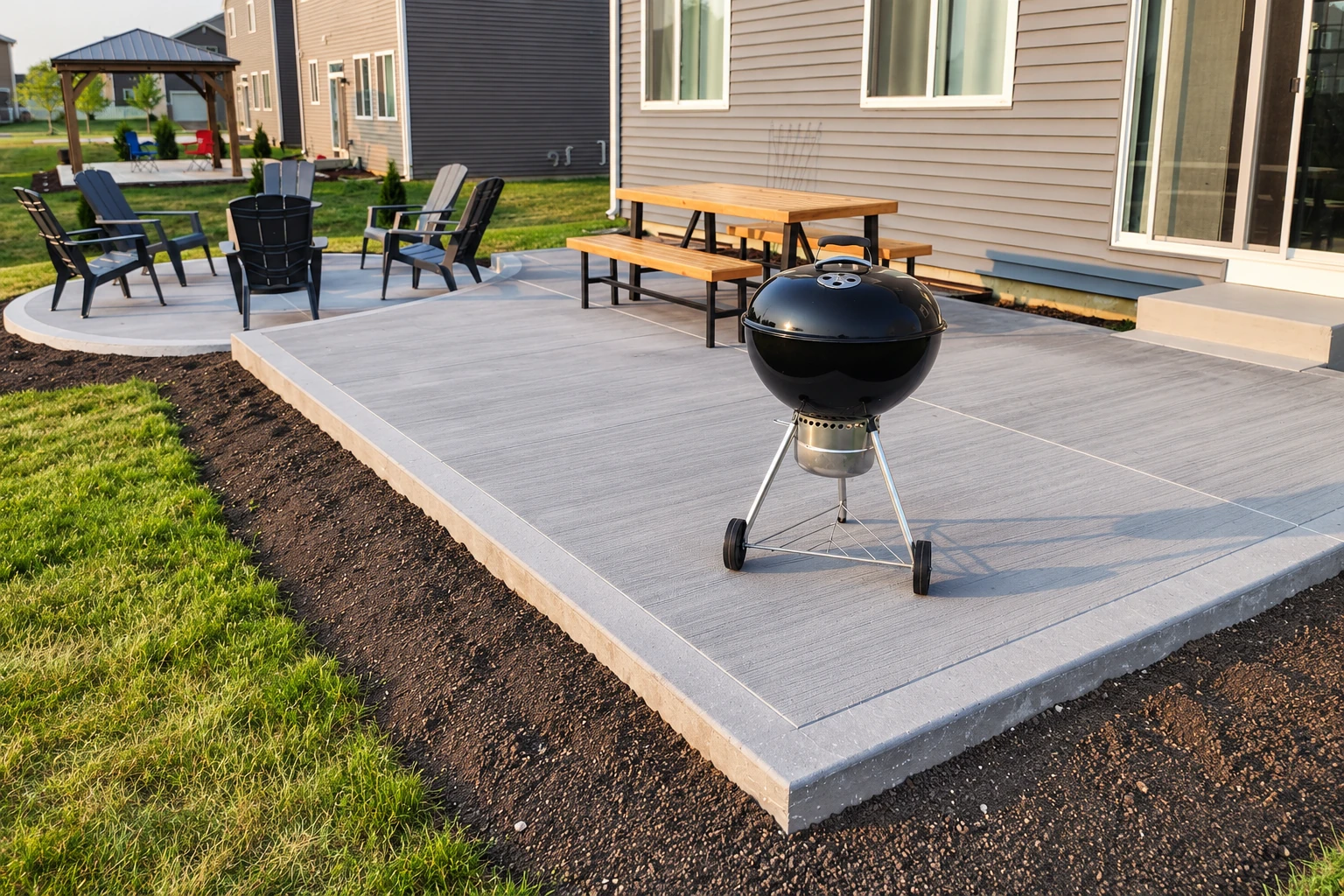
Concrete patio construction in Bend means pouring a ground-level slab beside your house, a solid outdoor spot to sit, eat or grill, on a base we dig out and pack so it stays where we put it.
Most people call because an old patio has cracked, sunk or started holding water, or because there's a patch of yard they'd like to actually use. Before we talk finishes, I pin down where the patio goes, how big it is and whether an old one has to come out first, because those things move the price most, along with whether the slab needs steel and which finish you pick. The schedule mostly turns on the weather and on any permit the job needs. If you'll want a walkway out to the patio, it's easiest to plan it now, and your estimate puts your own numbers on all of it.
How do you know it's time for a new patio?
A new patio usually starts with something you've noticed out back. Either an old slab is failing or the yard isn't working for you. These are the signs we hear about most.
Cracks across the old patio that keep getting wider usually mean the ground underneath has moved.
A slab that has sunk or tipped toward the house usually sat on dirt that was never packed.
Water pooling on the patio or along the foundation after rain means the slab isn't draining the right way.
A top that flakes, chips or turns dusty often points to a weak surface or winter damage.
A raised lip where two slabs meet usually means one piece settled and the other didn't.
A muddy or gravel patch by the back door that you never use is usually the spot a patio fixes.
Call sooner if the slab tilts toward the house or water sits against the foundation, because that's a drainage problem and it won't fix itself.
What happens after you call about a patio in Bend?
Here's how a patio job runs with us, from your first call to the day we pack up. I handle the estimate myself, and I'm on site while our crew does the work.
Call or send a request
Call (458) 256-4015 or use the request form, and we get back to you to set a time for me to come out.
I look at the site
I look at where the patio goes and how the yard drains, and I ask what you need the concrete to do. You get a written estimate that says what's in it and what isn't, and I tell you whether the job needs a permit.
We set the pour date
Once you say go, we sort out any permit and pick a pour date with the forecast in mind. If a permit is needed, we pull it ourselves or tell you plainly who has to before anything goes on the calendar.
We pour and clean up
Our crew digs out and packs the base, sets the forms, pours and finishes the slab, and I run the job on site. We clean up before we call it done.
Get a free on-site estimate for your Bend patio
Send the form and we reply within one business day to set a time. I come out, look at the site and write up a free estimate, with no obligation, that says what's in it and what isn't.
- Call
- (458) 256-4015
- Hours
- Mon–Sun: 6 AM–11 PM
Patio base, steel and finish choices
The part of a patio you can't see decides whether it stays flat. We dig out the subgrade, the dirt the slab sits on, and pack a base instead of raking the yard level, because raked dirt settles and takes the slab with it. We also check where water runs so the patio falls away from the house. When budgets get tight, people want to trim the base and keep the nice finish. I'd do it the other way around, because a nice finish on a sinking slab is still a sinking slab.
Rebar is steel laid inside the slab to hold it together, and not every patio needs it, so I'll tell you at the estimate whether yours does and why. Concrete shrinks as it sets, so every slab gets control joints, grooves we cut on purpose so any cracking follows a straight line we chose. When joints get cut late or skipped, you get the random cracks people call us about.
Most patios get a broom finish, a stiff broom dragged across the wet surface to leave fine ridges that give your feet grip when it's wet or icy. If you want pattern and color, stamped concrete is the step up. We'd rather not pour in midday heat, which can leave a weak, dusty top. One concrete trade group advises a penetrating sealer once the slab is 30 or more days old and any surface compound has worn off.
Concrete patio questions from Bend homeowners
How much does a concrete patio cost in Bend?
A concrete patio in Bend usually costs about $6 to $16 per square foot, going by area pricing, not a quote from us. Reinforced patios cost more per square foot than unreinforced ones, and the price per foot can climb when an old patio has to be torn out first. Your estimate spells out what's in your number and what isn't.
What is the best concrete mix for a patio that freezes and thaws?
Air-entrained concrete is the one to ask for, because it holds millions of tiny air bubbles that give expanding ice somewhere to go and protect the surface from scaling. An industry sheet advises ordering good quality air-entrained concrete where slabs face severe freezing and thawing. Ask for it by name in every bid you get, ours included.
How cold is too cold to pour a concrete patio?
The industry treats it as cold weather when the air drops, or is expected to drop, to 40°F or below while fresh concrete is still being protected. Cold slows the set and can freeze the slab before it gains strength, and one cold-weather guide says the ground underneath should be at least 40°F, with no pouring on frozen ground. That's why we pick a pour date that keeps the fresh slab clear of a cold night, including in early fall and late spring.
How do I take care of a new concrete patio its first winter?
Keep deicing chemicals off it the first winter, because they make scaling worse on young concrete. An industry sheet advises skipping them that first season and using only moderate amounts after that. Plan another way to clear ice before the first storm, like a shovel kept by the back door.
Do I need a permit to build a concrete patio in Bend?
I check that at the estimate, because the City of Bend lists permits for patio covers over 12 feet high or 200 square feet and doesn't name the slab itself. Even without a permit, the city says you have to check your property's zoning first to see what you can build. Zoning lets ground-level areas like patios cover up to 15 percent of your required landscape area, and lots along the Deschutes River and Tumalo Creek have extra standards, so size and spot get settled before the pour.
Does a concrete contractor need a license in Oregon?
Yes, generally. The Oregon Construction Contractors Board says state law requires anyone paid for construction work that improves real property to be licensed, and concrete is on its list. We're fully licensed and insured.
Related concrete work for your patio
Stamped concrete services
If plain gray isn't what you pictured, stamped concrete gives the patio a pattern and color like stone or brick while keeping a poured slab underneath.
Concrete sidewalk building
A patio is easier to use when a solid walk leads to it, so you're not crossing wet lawn or loose gravel from the driveway or back door.
Tell us about the patio you want
Call (458) 256-4015 any day from 6 AM to 11 PM or use the request form, and include the rough size, your address and whether an old patio comes out, so I know what to look at before I get there.
Mon–Sun: 6 AM–11 PM