Concrete cutting in Bend OR - clean, straight cuts with the dust kept down
Need a doorway in a concrete wall, a trench through the slab or a broken section out? We saw it clean and leave the rest intact.
What does concrete cutting involve, and what drives the price?
Concrete cutting in Bend means sawing a clean line through a slab or a wall with a diamond blade, so you can open a doorway, run a trench or take out a broken section without busting up the concrete around it. We're based in Bend and do this work here and in the cities around it.
Most calls start with concrete that's already there and needs to change: a doorway into a basement wall, a trench across a garage floor for a new drain line, or a broken stretch of driveway that has to come out before new concrete goes in. The price turns on how many feet we cut, how thick the concrete is and whether there's steel in it, whether we're working indoors, and whether the pieces get hauled away or left for you. The schedule mostly turns on whether the concrete needs a scan first and whether a permit is involved, and we check that at the estimate, then either pull the permit ourselves or tell you plainly who has to before anything goes on the calendar. Your own number comes from that estimate. If the cut is the start of a new concrete driveway or patio, we'll plan the two together so the new pour lines up with the cut.
When does a slab or wall need cutting?
Nobody calls about cutting out of the blue. It usually comes up because something else needs to happen first, and these are the situations that bring most people to us.
You want a door or window where there's only a solid concrete wall, which means a wall saw cut.
A new drain or water line has to run under the garage or basement floor, so a trench gets cut.
One slab section has cracked or sunk while the rest is fine, so cutting it out spares the good concrete.
A sidewalk panel has lifted and people catch their toes on it, so it usually needs sawing out.
Water keeps pooling on a slab, and cutting in a drain channel can give it somewhere to go.
You're widening a driveway or patio and need a straight, clean edge for the new concrete to tie into.
If a broken panel is a trip hazard or water is running toward the house, call (458) 256-4015 now rather than letting it ride another season.
What happens when you call for concrete cutting in Bend?
Here's how a cutting job runs with us, from the first call to the last bit of cleanup, and who handles each part along the way.
Call or send a request
Call or use the form and tell us where the cut is, roughly how long it runs, whether it's a slab or a wall, indoors or out, and whether the pieces need to go. That lets me show up already knowing the right questions to ask.
I look at the concrete
I come out, measure the cut and ask what you need the opening or trench to do. Then I write up an estimate that says what's in the price and what isn't, so there's no guessing about extras later.
Permits and a date
Once you say go, we sort out any permit the job needs and set a date with the weather in mind. If the concrete needs a scan, that's the first thing on the schedule.
We cut and clean up
Our crew makes the cuts while I run the job on site. We clean up the slurry and the site before we call it done.
Get a free on-site estimate for your concrete cut
Send the form and we'll reply within one business day to set a time. I'll come look at the cut and write up a free estimate, with no obligation to go ahead.
- Call
- (458) 256-4015
- Hours
- Mon–Sun: 6 AM–11 PM
Saw types and setup for different cuts
Most of what we cut is flat: floors, driveways, sidewalks and trench lines across a slab, done with a walk-behind floor saw. Walls are a different job. A floor saw can't cut a vertical face, so a door or window opening in a concrete wall is done with a wall saw, a diamond blade that runs along a track fastened to the wall. Round holes for pipes or drains are core drilled, which is its own tool and usually its own price.
Sawing concrete throws a lot of fine dust, and keeping water on the blade cuts that dust way down, so we cut wet. The catch is slurry, the gray paste of water and concrete dust that wet cutting leaves, and we plan where it goes before we start. Indoors there's more setup, like electric or hydraulic saws instead of gas, slurry recovery, plastic barriers and ventilation, which is a big part of why indoor cuts usually cost more.
When we cut out a broken section so new concrete can go in, the sawing is the easy part. What's underneath is the subgrade, the ground the slab sits on, and if that settled or washed out, it's usually why the old concrete broke in the first place. I'd rather spend your money digging that out and packing a solid base than on a fancier surface, because nobody sees the base, but it's what keeps the new section from sinking like the old one.
Concrete cutting questions from Bend homeowners
How much does concrete cutting cost per foot in Bend?
Professional saw cutting of a concrete slab across the US usually runs about $4 to $15 per linear foot, and that covers the sawing alone. Thick or reinforced slabs and indoor setups push toward the high end, and on a small job a minimum or trip charge can matter more than the per-foot rate, so ask for a total job price. I'll give you that total for your job at the estimate.
How do I know if a concrete cutting quote includes hauling the pieces away?
Ask, because sawing and removal are separate jobs, and some cutters leave the cut panels lying right where they were. Breaking up, hauling and dump fees can add more than the cutting itself. Our estimate says in plain words whether hauling is in the price.
Who cleans up the slurry after wet concrete cutting?
The crew does, because cleanup is the cutter's job whether the cut is wet or dry. Hosing slurry into the street is a bad idea in Bend, since runoff here reaches the river and the groundwater, the city prohibits any discharge that would break its stormwater permits, and whoever caused or is responsible for the discharge is the one held liable. Ask any cutter upfront whether they'll vacuum up and contain the slurry, and we'll tell you at the estimate how we'll handle yours.
When should I call 811 before digging after a concrete cut?
Call 811 at least two business days before anyone starts digging, and that includes digging out the ground under a slab that's just been cut for a trench. That's Oregon's call-before-you-dig rule, and you can also reach it at 1-800-332-2344. The saw only goes through the concrete, but the shovel goes into the ground where buried lines run, so build those two days into the schedule.
Who can cut a sidewalk or curb in front of my house in Bend?
Only contractors on the City of Bend's qualified list can apply for a permit to work in the public right-of-way, the strip along the street the city controls, and private work there has to use one of them. That usually takes in sidewalks and the end of a driveway where it meets the street. We're fully licensed and insured, and if your cut reaches that far, I'll tell you at the estimate who has to pull that permit and do that part before anything is scheduled.
How do I find out if there's rebar or pipe in my slab before it's cut?
A scan of the concrete shows what's inside, like rebar, the steel bars that give a slab its strength, post-tension cables pulled tight inside some slabs, conduit and pipes. On structural concrete we scan before we cut, and the scan comes first, before the saw starts. Hitting a tensioned cable or a live line is the kind of mistake you can't take back.
Concrete work that often follows a cut
Concrete driveway building
Once a broken stretch of driveway is cut out, the new pour needs a packed base underneath and a clean tie-in so it doesn't sink again.
Concrete patio construction
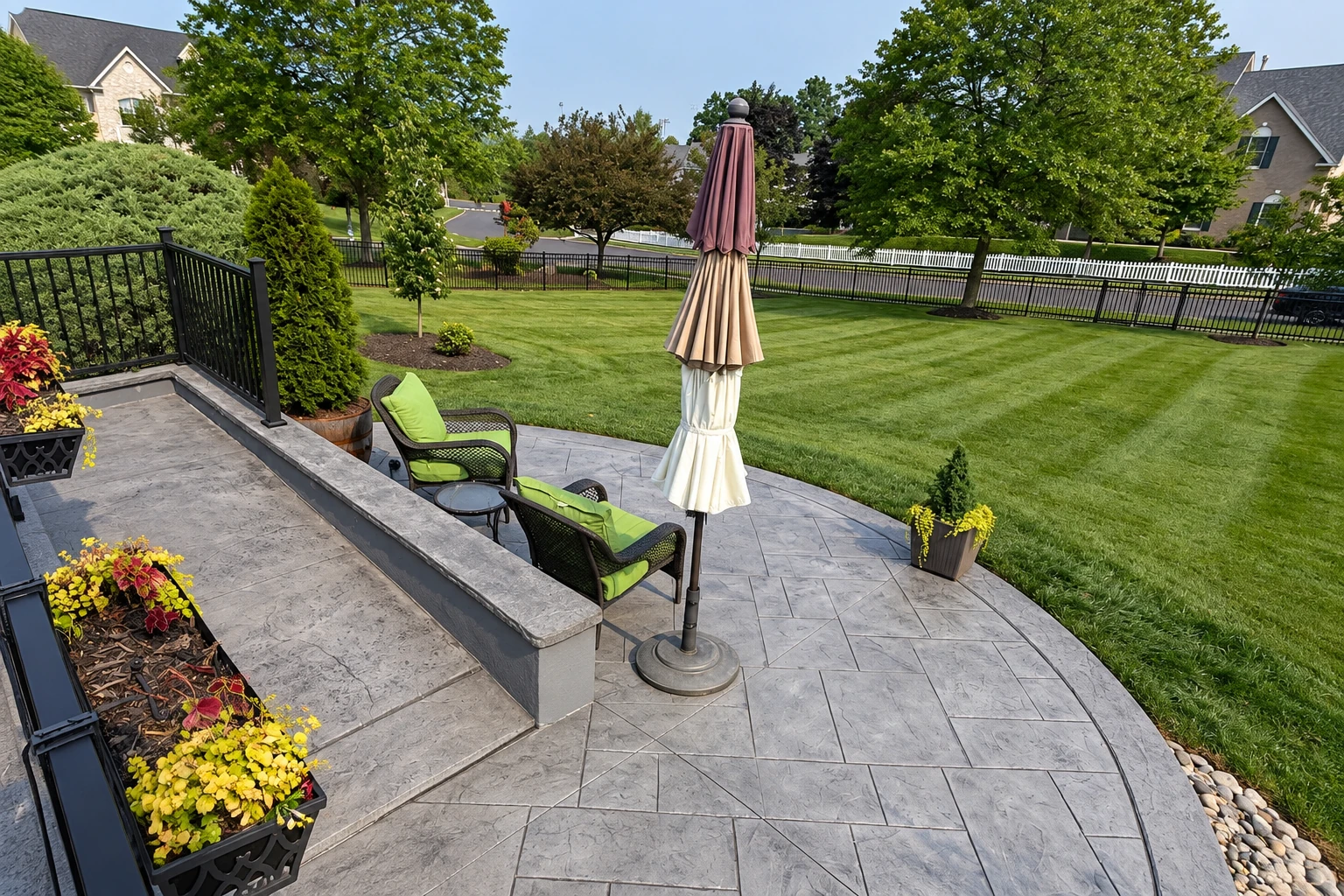
Cutting a new door out to the yard or removing a cracked slab is often the first step toward a patio that drains away from the house.
Tell us where your cut goes
Call (458) 256-4015 or use the request form, and if a plumber or builder is waiting on your opening or trench, tell us their date so we can plan around it.
Mon–Sun: 6 AM–11 PM