Concrete retaining walls in Bend OR - a wall that holds the slope and drains well
If your slope is washing out or pushing over an old wall, we build a poured concrete wall that keeps the dirt where it belongs.
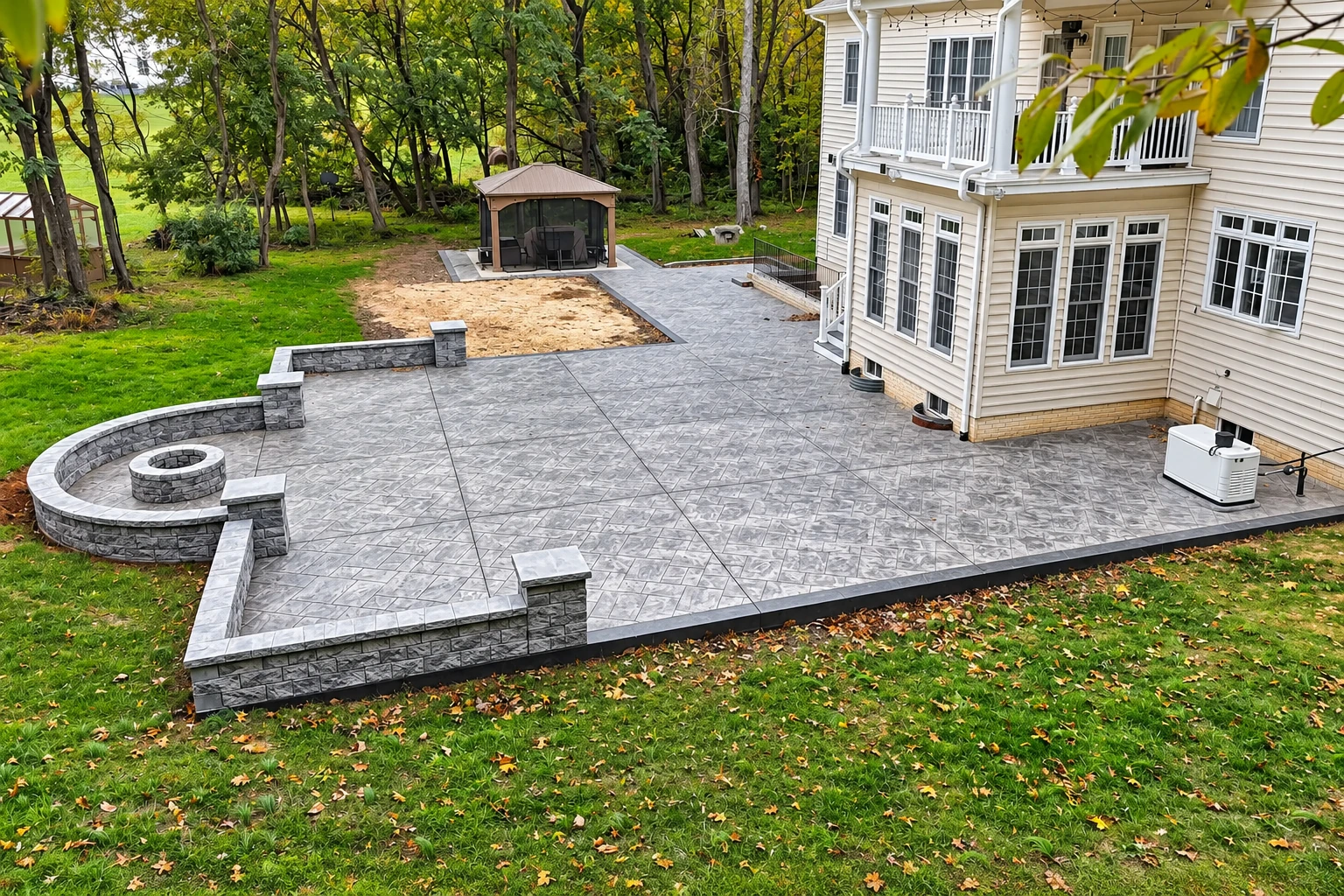
What goes into building a concrete retaining wall in Bend?
A concrete retaining wall is a poured wall that holds a slope in place and keeps soil and rock off your house, driveway or patio. We build them in Bend and the cities around it, and we work out the drainage before anything else.
Most calls start with soil sliding onto a driveway or patio, an old tie wall that's leaning, or a slope you want flat enough for a garden or a pool deck. The price moves with the wall's height and length, how easy the spot is to reach, how much digging and drainage it takes and how complicated the shape is. The schedule turns mostly on permits and the weather. I'll come out, walk the slope with you and give you an estimate in writing that spells out what's included and what isn't.
How do you know a slope needs a retaining wall?
Most people call once the slope starts showing them it's moving. These are the things homeowners usually tell me about, and what each one tends to mean for the ground behind it.
An old tie or timber wall leaning outward usually means soil and water pressure are winning behind it.
Dirt and rock washing onto your driveway, patio or walk after a storm means nothing is holding the slope.
Cracks through an existing concrete wall, especially with one side pushed out, usually point to pressure building behind it.
Wet, muddy ground along the top or base of a wall after snowmelt usually means water is backing up behind it.
Puddles that sit at the bottom of a slope long after rain tell you the water has nowhere to go.
A yard too steep to use is a common reason to cut it into flat steps with a wall.
If a wall is leaning or soil is already reaching your house or driveway, call (458) 256-4015 now instead of waiting through another thaw.
What happens when you call about a retaining wall in Bend?
Here's how a wall job runs with us, from the first call to the cleanup. I'm there at the estimate and on site during the build, and our crew does the work.
Call or send a request
Call (458) 256-4015 or fill out the form, and we'll set a time for me to come out. It helps to tell us what the slope is doing, like soil washing down or an old wall leaning.
Walk the slope together
I look at where the water comes from and where it can go, ask what you need the wall to do and check whether the job needs a permit. Your written estimate lists what the price covers and what it doesn't, so nothing shows up later as a surprise.
Permits, pour date, then build
Once you say go, we sort out any permit and set a pour date with the forecast in mind. Our crew digs, sets the forms, the drain and the steel, and pours, and I run the job on site.
Clean up and walk it
We clean up the site before we call it done, because nobody wants form boards and gravel left in their yard. Then we walk the finished wall with you.
Get an estimate for your retaining wall
Send the form and we'll get back to you within one business day to set a time for me to come out. The estimate is free, done on site, and comes with no obligation.
- Call
- (458) 256-4015
- Hours
- Mon–Sun: 6 AM–11 PM
Poured concrete, steel and the drain behind the wall
A poured wall starts with a footing, the wide concrete base the wall stands on. Then we set forms for the wall and place rebar inside, which is steel that holds the concrete together while the soil pushes on it. Poured concrete fits slopes next to a house, driveway or patio, where you want a straight, solid face and room to tie in steps or a walk. Boulder walls suit a looser, natural look on bigger lots.
Most people pick a plain face, and some want texture or color to match a patio. If the budget's tight, go plainer on the face and keep the money in the footing and the drain, because nobody sees them on day one and they decide whether the wall stays straight. When a wall cuts in to make room for a shop or a concrete floor on the low side, we plan the grades together.
Before I come out, you can look up your own lot. Deschutes County's design criteria page links to a state mapping tool that builds a report for a work site, and for home projects it shows the frost line depth, ground snow load and air freezing index for that spot. Those numbers tell you how deep the ground freezes and how hard winters are where your wall will sit.
Retaining wall questions we hear in Bend
How much does a concrete retaining wall cost in Bend, OR?
Poured concrete retaining walls in Bend usually cost about $35 to $50 per square foot of wall face. That's the going rate in the area, not our quote, and it puts poured walls above railroad tie walls and in the same range as boulder walls. Your own number comes from the estimate, once I've seen the slope.
Do I need a permit for a retaining wall in Bend?
Oregon requires a building permit for any retaining wall that supports a building such as your house, protects the people who use it, or holds back soil that could hit one. A city can add its own rule for other walls, but that rule can't cover walls 4 feet or shorter, measured from the bottom of the footing to the top, unless the wall holds up a steep rising slope or a load other than soil. I check at the estimate whether yours needs a permit, and if it does, we pull it ourselves or tell you plainly who has to before anything goes on the calendar.
What causes a concrete retaining wall to fail?
Poor drainage is by far the most common reason retaining walls perform badly, and if nobody deals with it, the problems can turn into outright failure. Water that collects behind a wall adds pressure the wall has to hold back. That's why the drainage plan is the first thing to settle with any contractor, before the look or the shape.
What is the best way to drain a retaining wall so it doesn't clog?
A drain built so it can be cleaned out later is the more reliable choice, according to university research on retaining wall drains. Weep holes, the small openings that let water seep out through the face, relieve pressure but are likely to clog over the life of the wall. Where the site allows it, we'd rather build in a drain you can clean out than count on holes that plug up, so ask any contractor which kind they plan to use.
Can concrete be poured in Bend when the nights turn cold?
Yes, concrete poured in cold weather still gets strong when it's properly mixed, placed and protected. The risk is the air dropping to 40°F while it cures, meaning the days it spends hardening, because it can freeze before it gains strength, and early fall and late spring nights can get that cold. A concrete trade group's guide says to cover it right away with insulated blankets, straw or a heated enclosure, keep it at 50°F or warmer for at least 3 days, and pour only on thawed ground of at least 40°F. If a hard cold snap is coming, I'd rather move the pour than gamble on it.
How do I hire a licensed concrete contractor in Bend for a retaining wall?
Hire someone with a license, because the Oregon Construction Contractors Board says state law generally requires anyone paid for construction work on a property to hold one. We're fully licensed and insured, and we've been in business since 2017. I'm the one who comes out to see your slope, so ask me how I'd drain it and what the estimate leaves out.
Concrete work that often goes with a wall
Concrete pool decks
A wall that levels part of your yard often makes room for a pool, and the deck around it needs to shed water away from both.
Concrete floor installation
When a wall cuts into a hillside for a shop, studio or storage building, the floor inside needs the same packed base and drainage thinking.
Get your retaining wall estimate started
Call (458) 256-4015 or use the contact form, and have the wall's rough length and height and a few photos of the slope ready so I come out already knowing what we're looking at.
Mon–Sun: 6 AM–11 PM